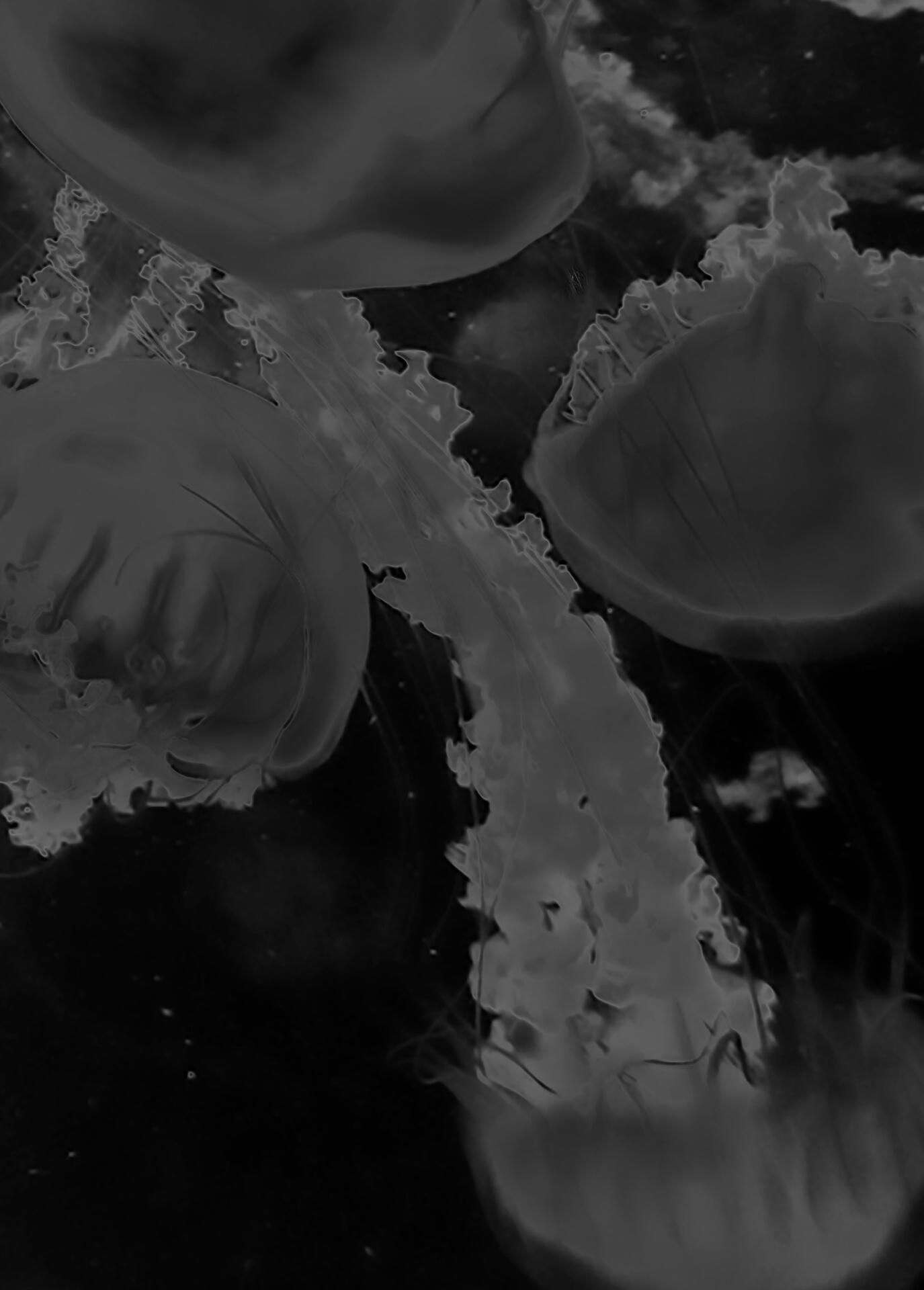

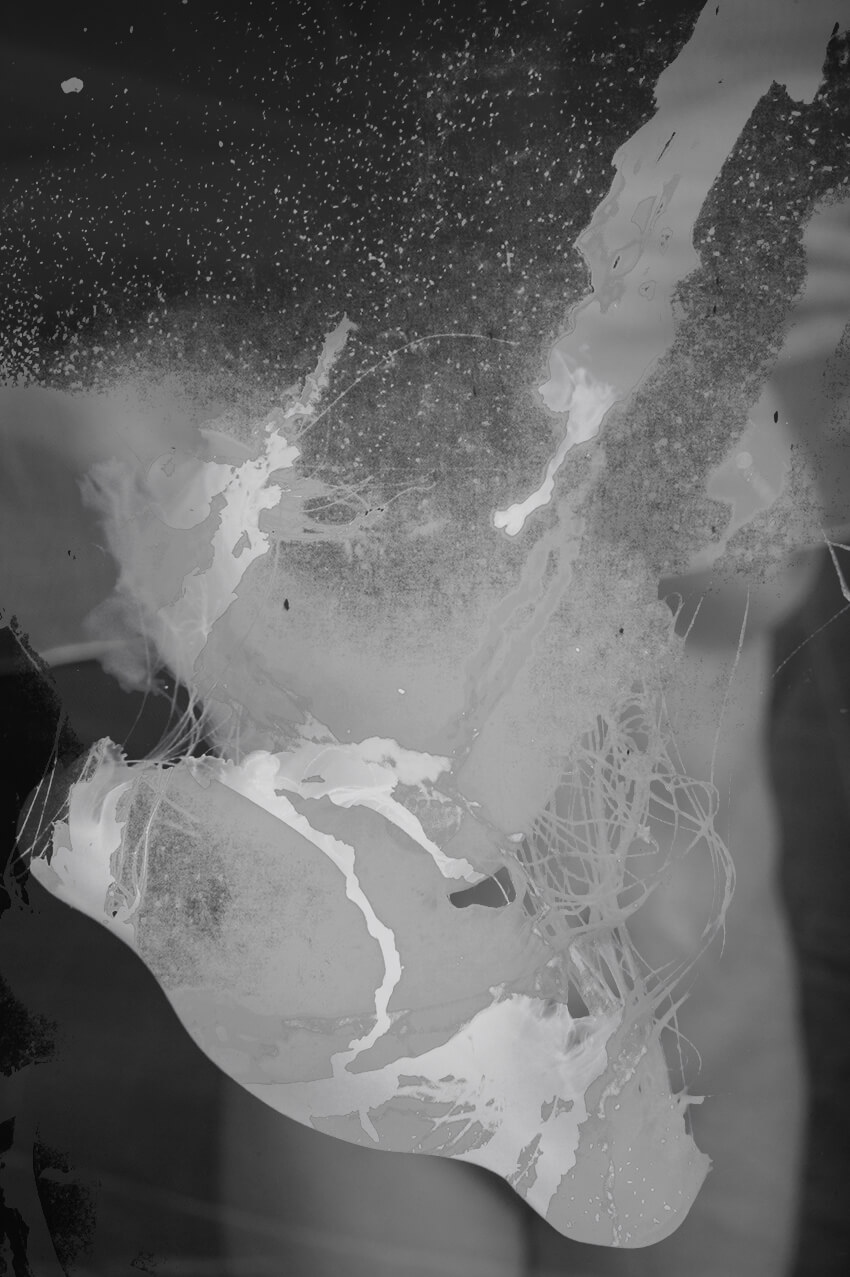
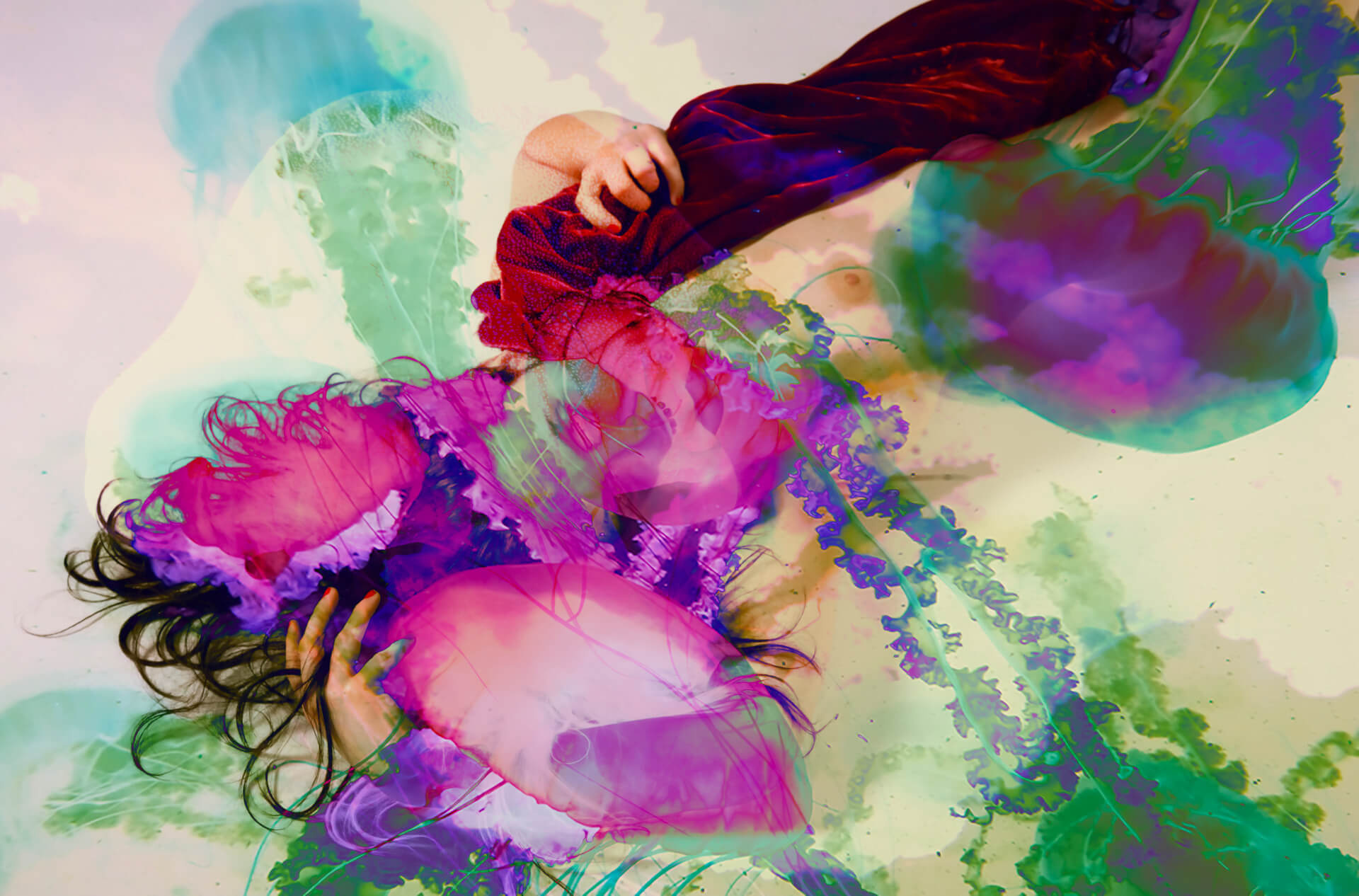
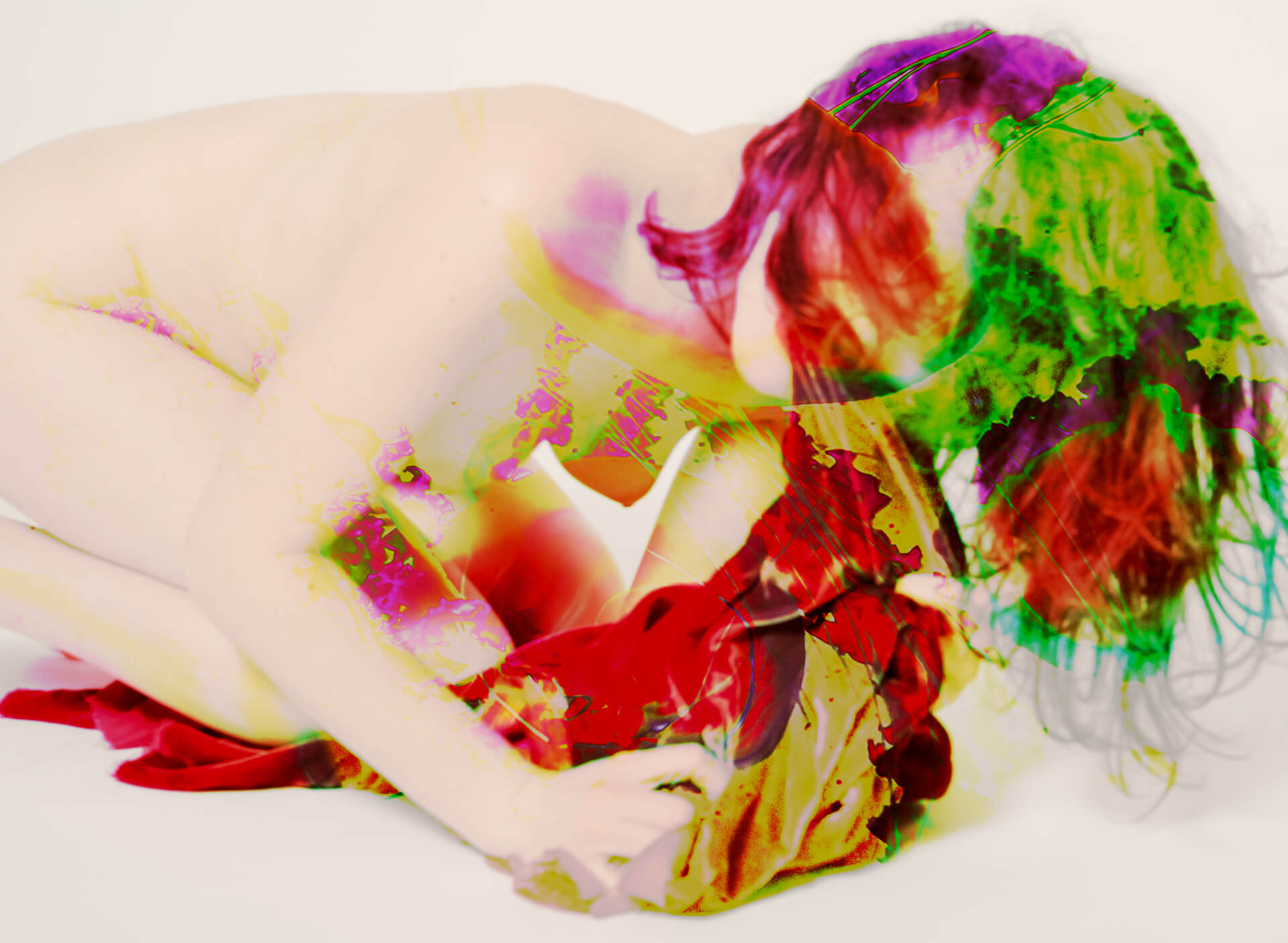
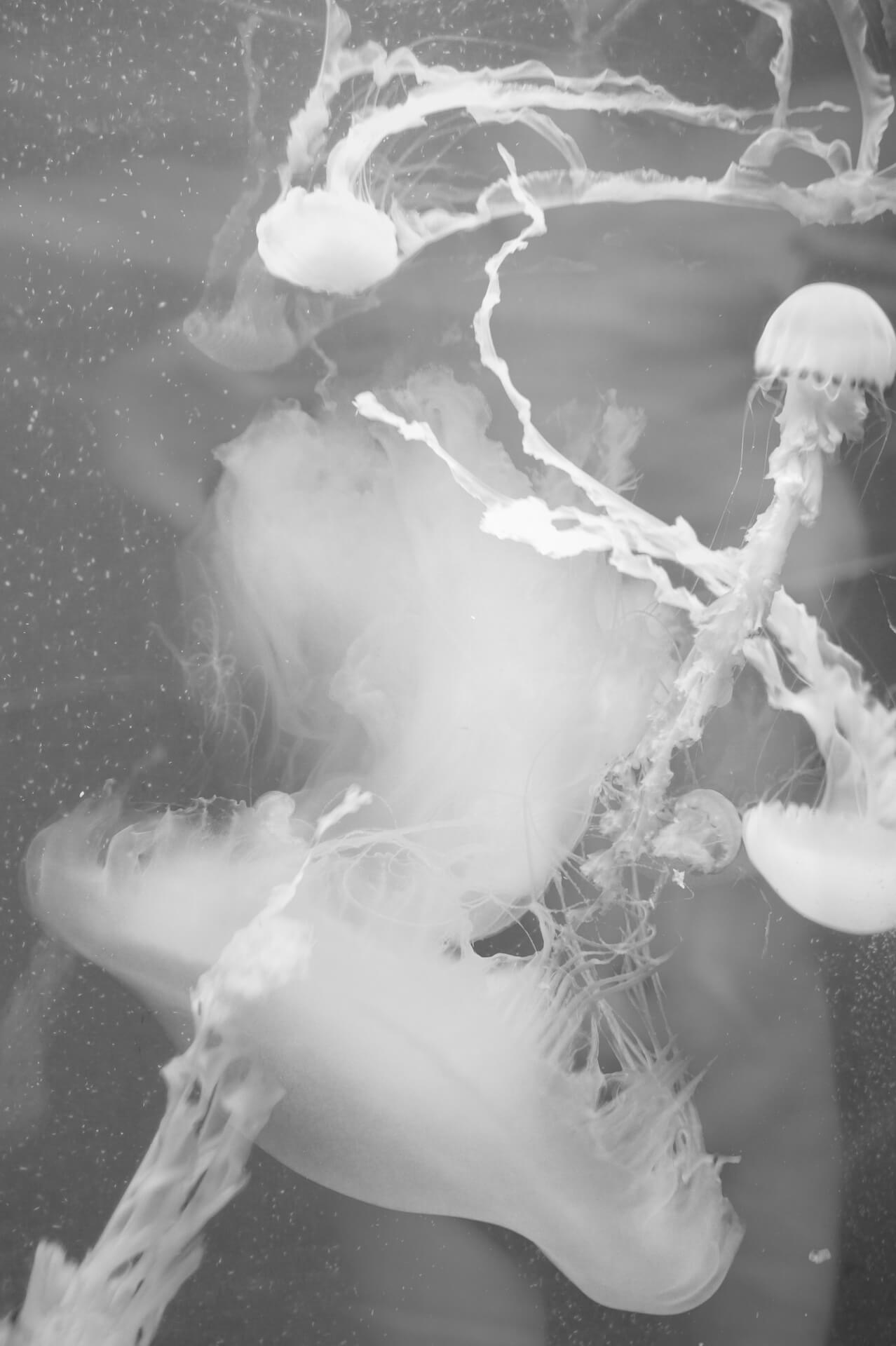

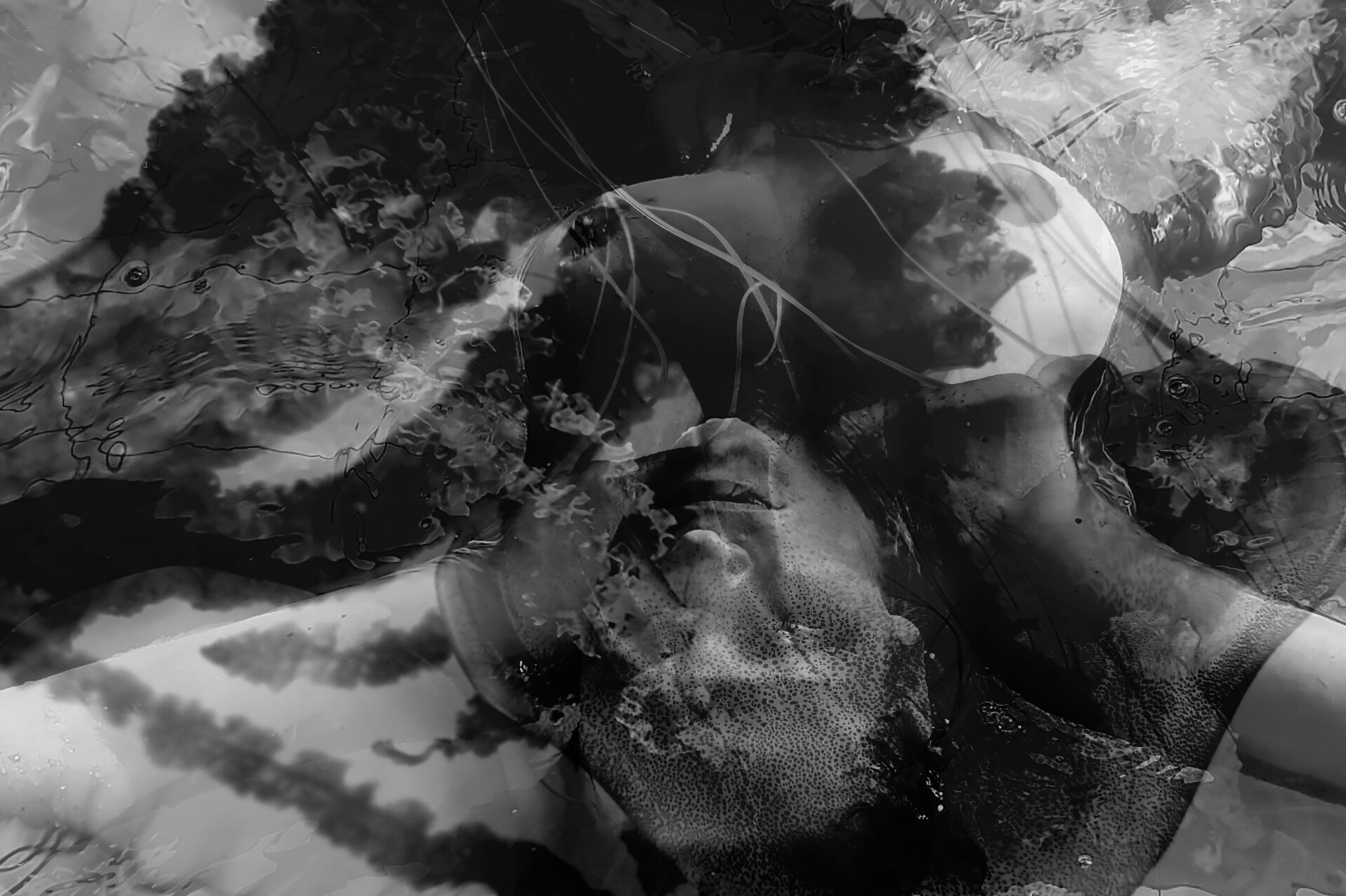
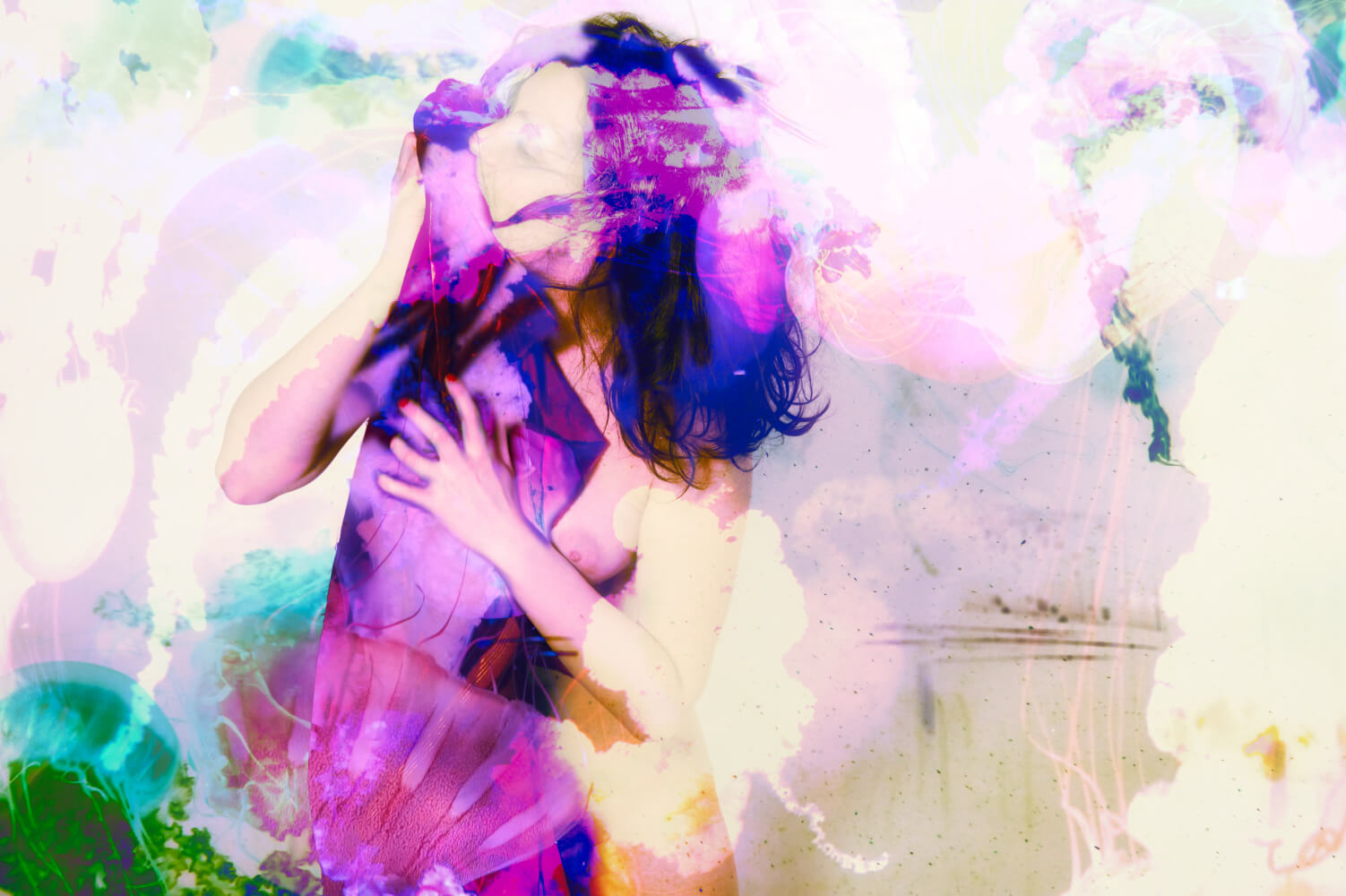
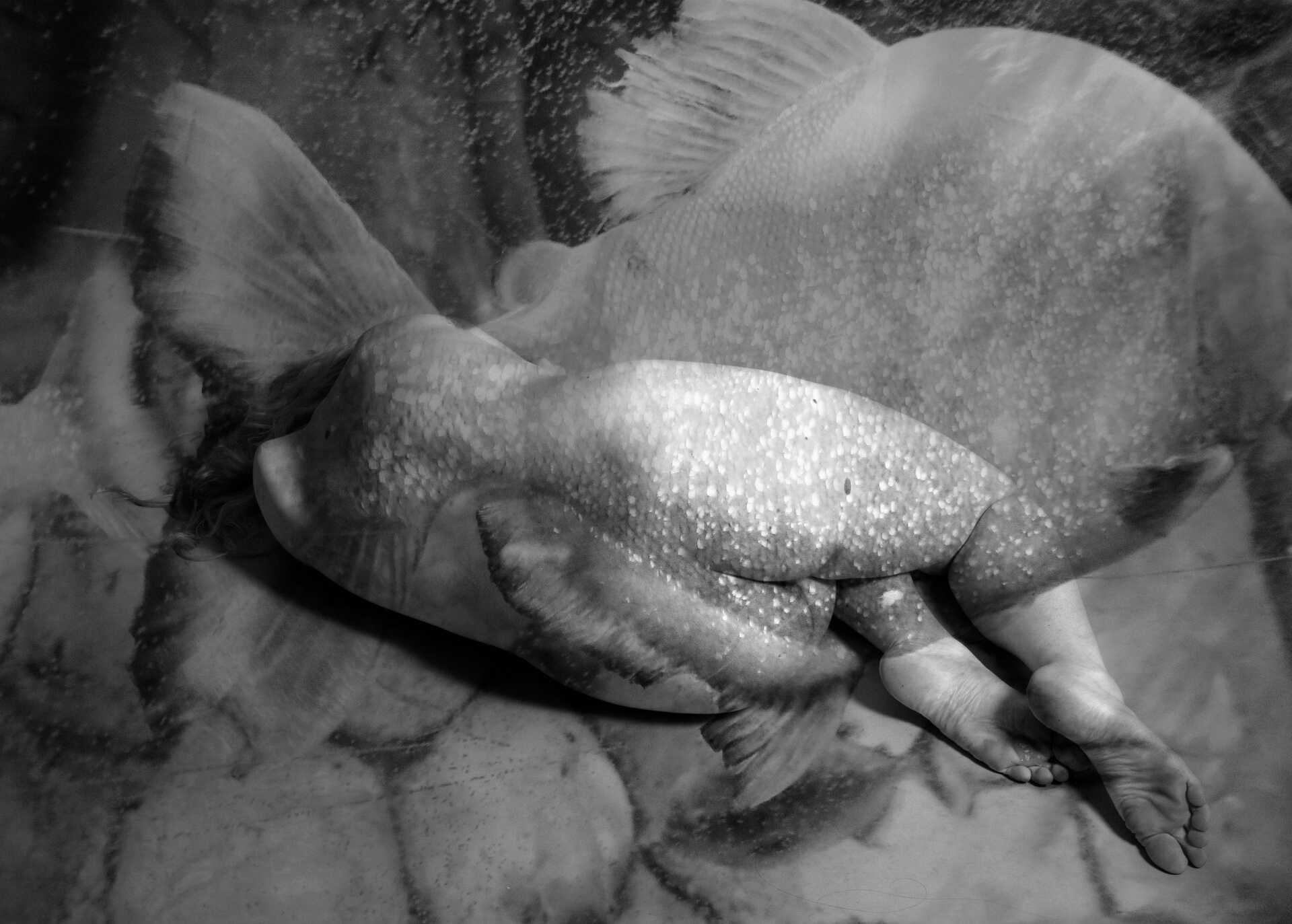


Jellyfish, sea jelly I, II, III
I work on the theme of the body, the multiple body; vegetal, mineral, animal or human and thus linking itself in the vital energy. The image of bodies is beauty, a beauty linked to pure forms and intimate mysteries with its secret places and subterranean reactions. Nature has served as a springboard for me through its forms, and in particular « the jellyfish », diaphanous structure and vital reserve, jelly of life, concentrate of life, syrup of life.
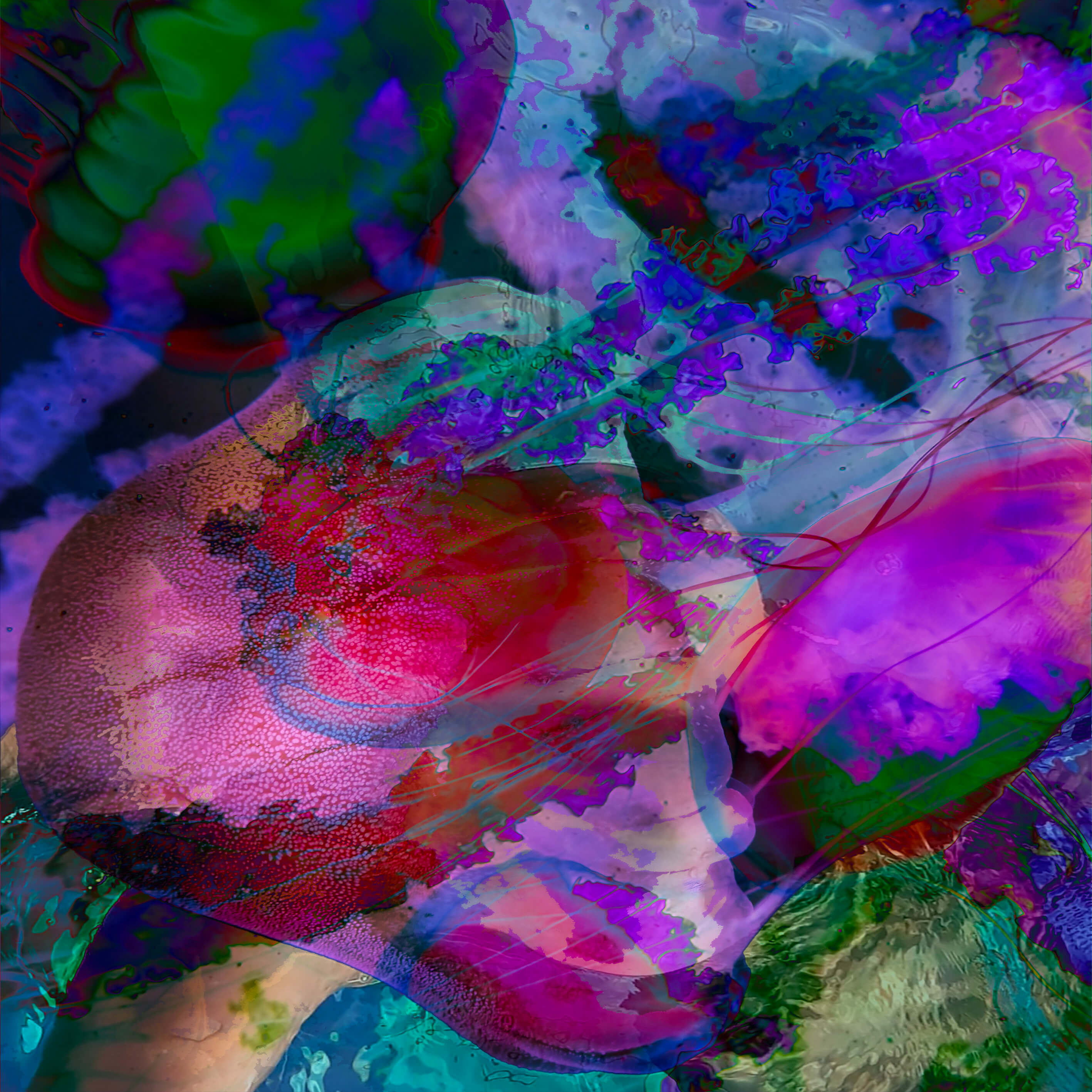
I have always been fascinated by jellyfish, and according to scientific research they are immortal, but only biologically.
Biological immortality was first described in cancer cells, whose apoptosis mechanisms (natural cell death) are blocked, thus rendering the cancer cell free of ageing, but the jellyfish can « age » and « rejuvenate ». In fact, this jellyfish would be able to reverse its ageing process, and thus return to its juvenile form after reaching its sexual maturity, and this indefinitely (theoretically) thanks to the process of trans-differentiation. This immortality only concerns its development, which in most living beings ends in old age and death. Because of its exceptional characteristics, it is the subject of studies by biologists and geneticists, since it is the only complex living organism known to date that is capable of reversing its ageing process. But this potential immortality worries scientists, as it is responsible for the proliferation of these jellyfish throughout the world’s waters.
Is this the reason why this jellyfish is truly colonising all the seas? It is difficult to answer this question at the moment. However, it is not immortal in the strict sense of the word: it is neither indestructible nor free from disease, predation or accident. Nor is it known whether it can decide to reverse its ageing process on its own or whether it is triggered by a specific environment. According to V. Battaglia, its potential immortality is not the real reason for its proliferation. It is known that many other species of jellyfish are multiplying around the world due to global warming and human activity. Overfishing of the jellyfish’s main predators is one possibility, another hypothesis is that ships and submarines unwittingly bring these tiny jellyfish into every port and they spread when the water in the ballast tanks is emptied.
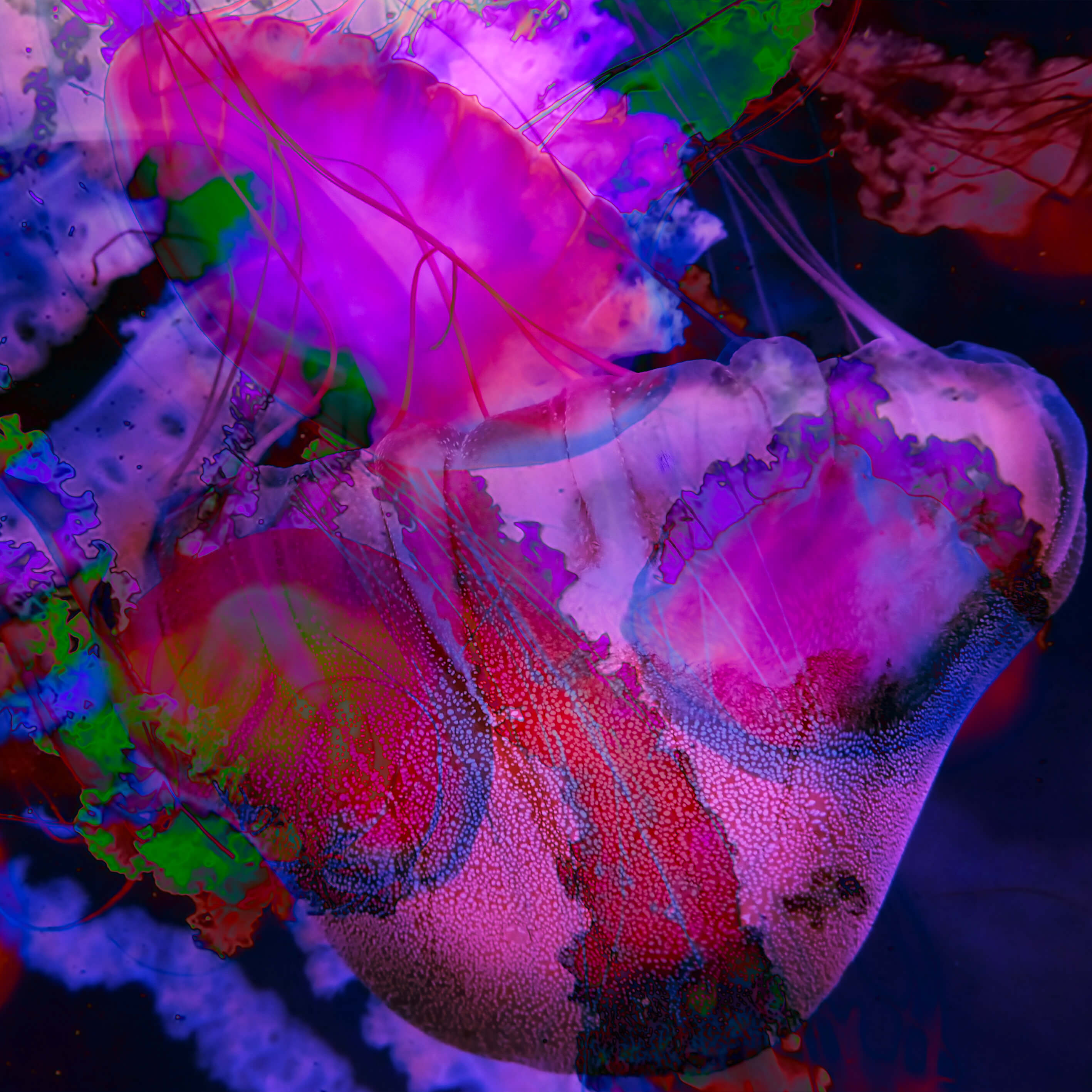
This photographic work is the encounter, the interpenetration of her bodies, the realization of patterns of spiritual interiority and blocks of sensation.
The dominant red of my work is vitality, warmth, erubescence.
Dorothée Wycart
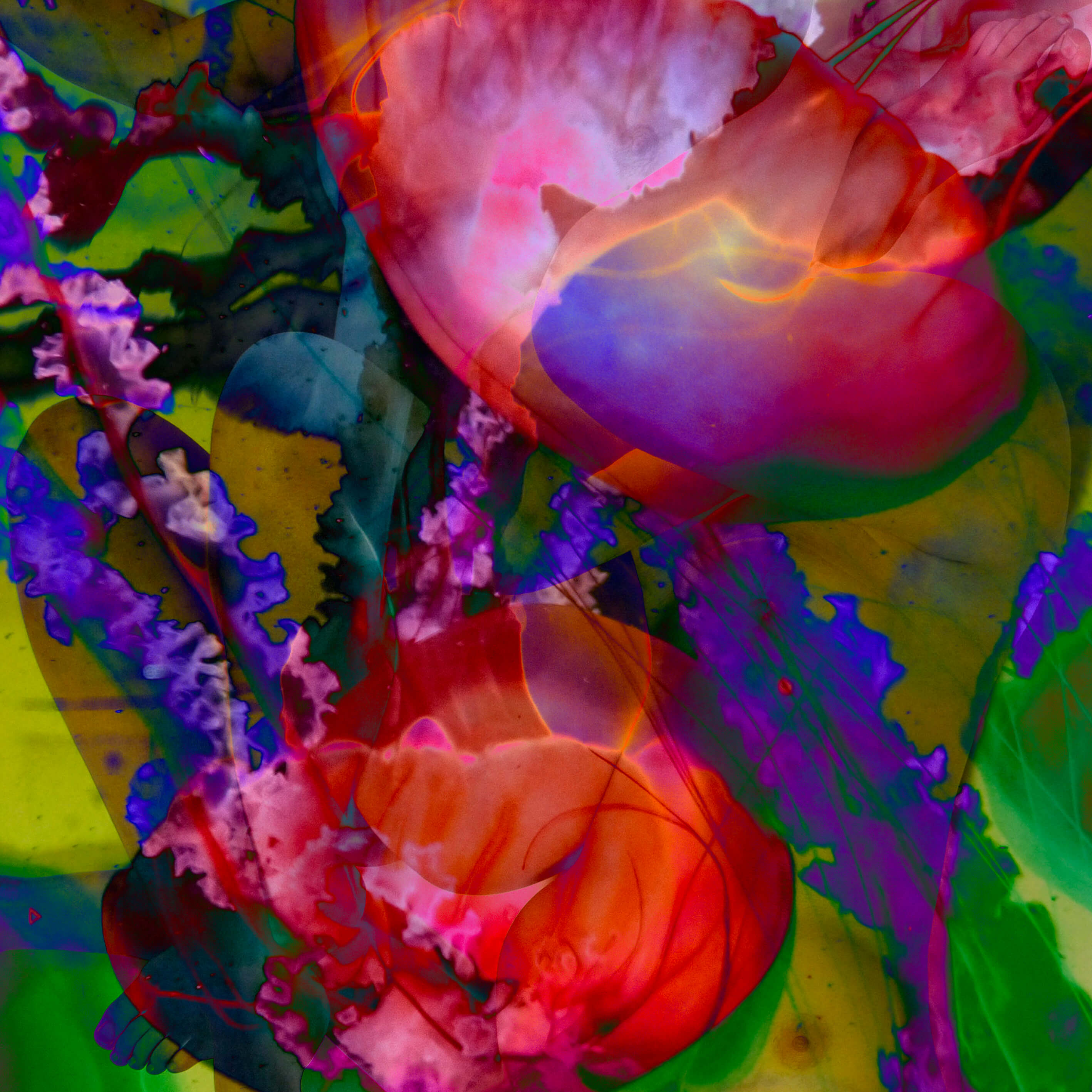
The prevalence of the visual of de-Venir calls upon primary forces: one detects here the goddess-mother, the siren, Lilith, Medusa… so many feminine forces which can jointly lead the man to his total achievement, to his rebirth and to his loss. We glimpse the fascination that these forces of fecundity and pleasure have exerted on the male gender and the ineluctability of the de-Future of the spectator (Medusa) and of the listener (Siren… but, yes, the works vibrate and we cannot escape their song).
A glance of woman on the body of other women would it live only by the glance of a man?
No, a thousand times no, and it would be an insult to Dorothée Wycart’s artistic approach to reduce the entangled female bodies of her pictures to the « cliché par excellence ».
The artist here is free, completely free… free from academic traditions (and the « nude » is particularly hindered by them), free from presumed or expected looks. This artistic sincerity contributes greatly to the primal fascination – Dorothée Wycart is there to remind us that it is a rare patriarchal arrogance to believe that mermaids need sailors to exist.
Dorothée Wycart’s photographs refer to the origin of things and their primal nature: her work is not only « original »… it is « essential ».
Roland Van der Hoeven
 Dorothée Wycart